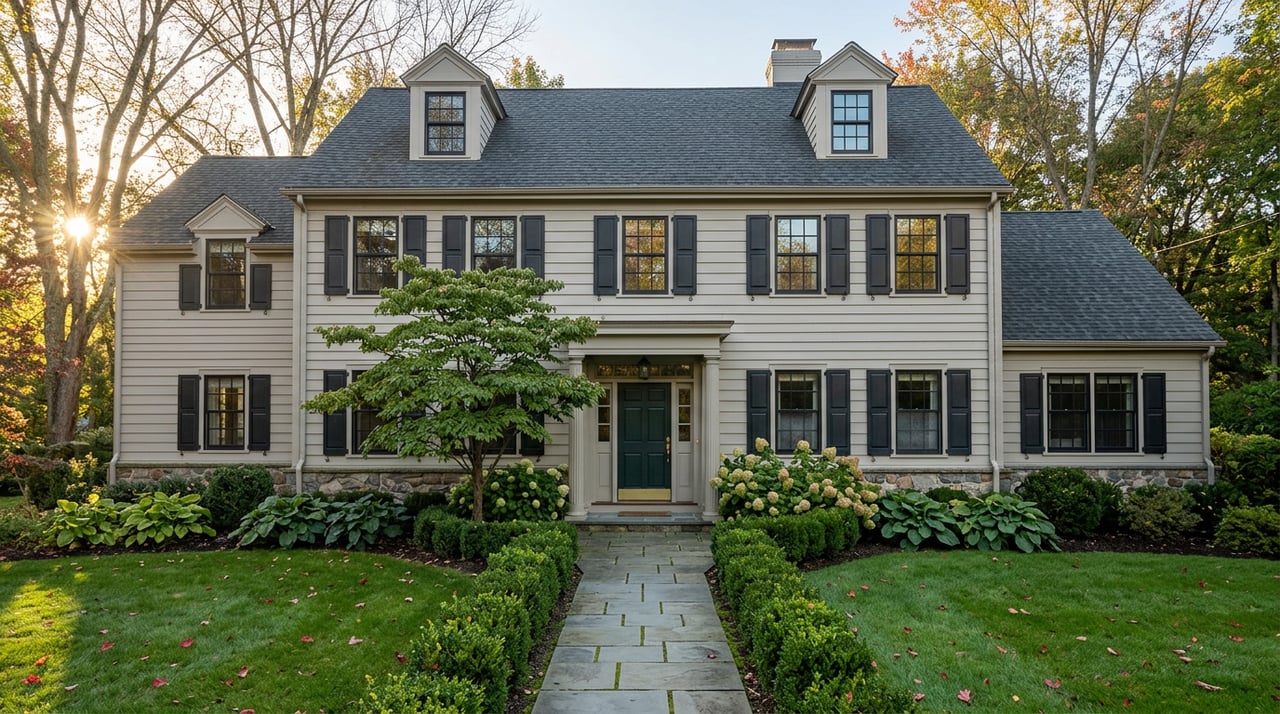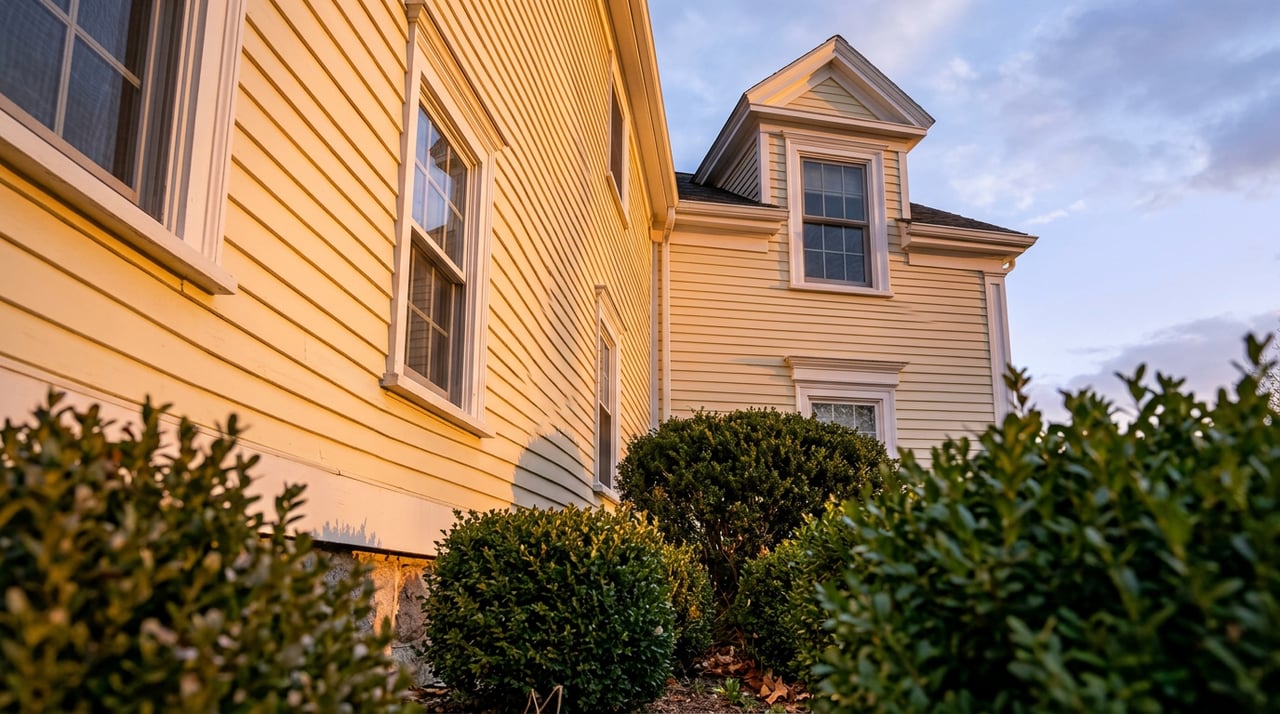
It rarely happens the way sellers expect. The home shows well, the offer comes in close to ask, and then a home inspector walks the side yard of a 1920s Colonial in Elmora and stops near the foundation planting bed. A capped pipe, maybe four inches across, sits a few inches proud of the soil. It hasn't been used in decades. Nobody in the house remembers it being used. But it's there, and once it's on the inspection report, the buyer's loan file stops moving until someone explains what it is.
That pipe is almost always the fill point for an underground heating oil tank, and in a city where a meaningful share of the housing stock predates 1950, it is one of the most common ways a clean sale turns into a six-week delay. The legal side of this is simple: New Jersey does not require you to dig up or decommission a tank before you sell. The practical side is where sellers get caught, because the people who actually control whether your deal closes on time, your buyer's lender, tend to hold a much higher bar than the state does.
The Law Sets a Floor. The Lender Sets the Real Bar.
New Jersey's rule is narrower than most sellers assume. There is no statute forcing removal before a sale closes. What the law requires is disclosure: any oil tank on the property, active, inactive, buried, or previously removed, has to be disclosed on the Seller's Property Condition Disclosure Statement. That's the legal floor, and it's genuinely low. You can, on paper, sell a home in Elizabeth with a tank still in the ground.
What happens next is a market question, not a legal one. Financed buyers almost never accept an undocumented tank, because their lenders won't fund against one. A tank sweep that turns up a buried tank with no closure paperwork typically stalls the mortgage underwriting until the seller resolves it, and if the sweep finds evidence of a leak, most lenders won't fund the property at all until remediation is documented. The seller who assumes disclosure alone satisfies the buyer is usually the same seller who finds out three weeks into escrow that satisfying the law and satisfying the bank are two different bars.
There's a second gap that catches people off guard even after removal: title insurance does not cover this. Environmental contamination is explicitly excluded from standard title policies, so the protection most sellers assume they're carrying into closing simply doesn't apply to a leaking tank discovered after the sale.
Why This Shows Up More in Elmora, Westminster, and the North End
Elizabeth's oil tank exposure isn't evenly spread across the city, and that's worth understanding before you assume it's someone else's problem. The neighborhoods where it surfaces most often are the ones built earliest, when oil heat was standard and gas conversion happened decades later, sometimes without anyone removing what was underneath.
Elmora and the Elmora Hills section to its northwest are largely prewar single-family housing, wood-framed Colonial Revivals and workers' cottages, with lots and floor plans noticeably larger than the citywide norm. A typical single-family home in Elizabeth runs just under 2,000 square feet; in Elmora, homes commonly run 3,000 to 4,000 square feet. Pricing reflects the vintage and the space: a three-bedroom 1920s Colonial in the neighborhood typically lists between $450,000 and $600,000, and a larger Victorian pushing 6,000 square feet can reach $750,000 to $1.1 million. Elmora Hills itself took its name from its original developer, the El Mora Land Company, and has held a solidly middle-to-upper-middle-class identity since it was carved out of Union Township in the early 1900s.
Westminster tells a similar story from a different direction. The neighborhood was promoted as Elizabeth's upscale residential section in the early twentieth century, and its large single-family homes remain some of the city's most substantial housing stock north of downtown. The North End was developed largely in the 1920s to house workers at the Duesenberg automobile plant, later the Durant Auto Company, and its one- and two-family homes have been renovated in waves over the decades without every owner necessarily tracking down what was buried in the yard along the way. Peterstown, settled by German and then Italian immigrants through the turn of the last century, carries the same construction-era profile.
None of this means every prewar home has a tank. It means the odds are meaningfully higher in these specific sections than in Elizabeth's newer construction, and that a buyer's inspector will be looking harder here than they would in a home built after 1980.
What the Updated Disclosure Statement Actually Asks You to Say
New Jersey updated the Seller's Property Condition Disclosure Statement effective August 26, 2026, and the oil tank section is specific about what counts. You're asked to disclose an active above-ground tank, including its location and condition. You're asked to disclose an inactive above-ground tank even if it's empty and disconnected. You're asked to disclose any underground tank you know about, whether it's active, inactive, or was abandoned in place by filling it with sand or foam rather than removing it. And if a tank was already removed, you're asked to provide the paperwork: the closure report, the soil sampling results, and if contamination was found and cleared, the No Further Action letter from the remediation program.
The detail that trips people up is the fill pipe standard. Converting your furnace to gas twenty years ago doesn't erase the disclosure obligation for the tank that used to feed it. If there's a fill pipe, a vent stub, or an old copper line still visible, that's physical evidence a competent home inspector will flag, and claiming you didn't know what happened to the tank doesn't hold up well once you've acknowledged the home once ran on oil. New Jersey courts have held sellers liable for undisclosed tanks discovered after closing, sometimes including the full cost of remediation even when the contamination predates their ownership.
What This Actually Costs, With and Without a Problem
A tank sweep, using metal detection and ground-penetrating radar to confirm whether something is buried and roughly where, generally runs in the few-hundred-dollar range and is usually done in a single visit. If a tank is confirmed, standard removal with no contamination, permits, excavation, soil sampling, disposal, and backfill included, tends to fall between $1,500 and $3,500 for a typical residential job. That's the manageable outcome.
If the tank turns out to have leaked, the number changes. Remediation commonly starts around $8,000 and climbs from there depending on how much soil was affected and whether groundwater is involved, which is a function of depth, geology, and how long the leak went undetected. The whole process, from the initial sweep through the final closure paperwork, typically takes two to eight weeks depending on the municipality, since a licensed contractor needs permits, a licensed closure professional has to be on site for the removal, and the township has to sign off before the file closes.
The State Fund That Sounds Like a Safety Net and Isn't, on Your Timeline
New Jersey does operate a program built for exactly this problem, the Petroleum Underground Storage Tank Remediation, Upgrade and Closure Fund, which offers grants and low-interest loans to eligible homeowners facing tank removal or cleanup costs. It's a real resource, and it's worth knowing it exists. What it isn't is fast. Current reporting on the fund's review process points to roughly a three-and-a-half-year wait, which makes it useful for a homeowner planning years ahead and functionally irrelevant to anyone trying to close a sale this quarter. If you're counting on state assistance to cover a tank problem discovered mid-transaction, you're counting on a program that operates on a different clock than your closing date.
Before Listing Versus After an Accepted Offer
The difference between handling this early and handling it during escrow isn't really about cost. It's about who's negotiating from strength. Order a tank sweep before you list, and if nothing's there, you've spent a few hundred dollars to remove a question mark from your listing. If something is there, you control the contractor, the timeline, and the price, and you can either resolve it before buyers ever see the home or price the home to reflect a documented, disclosed condition that a buyer can underwrite around.
Wait until a buyer's inspector finds the fill pipe, and the sequence flips. The buyer's lender pauses the file. The buyer's attorney sends a demand. You're now sourcing a contractor under a deadline, negotiating a credit that's often padded above the actual removal cost because you're the one who needs the deal to close, and watching your original closing date slip while paperwork moves through the township. Same tank, same removal, a meaningfully worse negotiating position.
A Few Questions Sellers in These Neighborhoods Tend to Ask
Do I have to remove the tank before I list my Elizabeth home? No. New Jersey doesn't require removal before a sale. You do have to disclose it on the Seller's Property Condition Disclosure Statement, and most financed buyers will require removal or documented closure before their lender will fund.
My home converted to gas years ago. Do I still need to worry about this? If there's any physical evidence the home once ran on oil, a fill pipe, a vent stub, an old line, disclosure is expected regardless of how long ago the conversion happened. A sweep before listing settles the question either way.
Does homeowners or title insurance cover a leak if one is found? Standard title insurance excludes environmental contamination. Some New Jersey homeowners policies offer a separate oil tank endorsement, which is worth a call to your carrier before you assume you're covered.
If you own a prewar home in Elmora, Westminster, the North End, or anywhere else in Elizabeth built before oil heat gave way to gas, the smartest move is finding out what's under the yard before a buyer's inspector does it for you. Links NJ works these neighborhoods block by block and can walk you through what a sweep costs, what to expect if something turns up, and how to time it against your listing. Request a free home valuation and let's talk through what your specific property needs before it ever hits the market.